You’re here because you’re rethinking Search Atlas. Either you’re already using it and the experience hasn’t matched the pitch, or you’re evaluating it and the public reviews are giving you pause. Both are valid starting points.
Search Atlas’s central pitch is consolidation: replace 12 or more SEO tools with one platform. The pitch is well-marketed and there are real users for whom it works. There is also a structural reason the pitch breaks for many users, and this guide takes that reason head-on before getting to the list.
The list itself is organized by function rather than by vendor category. Search Atlas does keyword research, backlink analysis, content optimization, AI content generation, technical audits, rank tracking, local SEO, PPC research, deployment automation (OTTO), and AI search visibility tracking. A Search Atlas refugee could be leaving for any of those functions, and the right alternative depends entirely on which one. Read the section that maps to what you were actually using Search Atlas for.
1. Why people are leaving Search Atlas
Three issues come up consistently across public reviews, including Trustpilot’s 3.5/5 average that sits well below the G2 4.8/5 score. The gap between those two ratings is itself useful signal: customers who self-select into G2 reviews skew positive; Trustpilot tends to capture frustrated customers more readily. Both audiences are real.
Reliability and integration quality are uneven
Public Trustpilot and Shopify App Store feedback include reports of broken sitemaps after install, sites de-indexed during onboarding, and plugin-level functionality that “works only periodically.” The Shopify reviews in particular are harsh, with multiple users describing the integration as the worst SEO app experience they’ve had on the platform. For agencies running production client work, “works only periodically” is itself the problem.
Support response times are slow when things break
A consistent thread across negative reviews: long waits for support, AI chatbot routing that loops back to the same questions across multiple days, and tickets marked “fixed” that were not actually fixed. G2 reviews remain strong, so experiences vary, but the variance is the issue. You cannot run client deliverables on a platform where support quality is a coin flip.
The pricing is more opaque than it looks
Search Atlas’s $99 to $399 monthly tiers are the floor, not the ceiling. The platform uses credits for AI features, content generation, and OTTO optimization runs. Sites with thousands of pages can burn through 500 AI credits inside a single audit. A site with 27,000 recommended fixes would consume roughly $1,000 in additional credits to apply them. Per-site OTTO activation fees scale with portfolio size on top of base subscription. Multiple users report actual monthly costs running 2 to 3 times the sticker price once credits and per-site fees are included.
A fourth concern, named honestly
Search Atlas’s OTTO module uses a JavaScript pixel to apply changes at render time. When the subscription ends, the pixel stops rendering and most OTTO-deployed changes revert. This is true. It is also true of any platform that uses snippet-based deployment, including Alli AI.
The honest framing is that snippet-based deployment is a tradeoff: you get instant rollout, instant rollback, no source code changes, and universal CMS compatibility, in exchange for ongoing infrastructure dependency. If permanent CMS-level changes are non-negotiable for your team, your replacement category is WordPress plugins (covered in section 9), not another snippet platform.
Note that this only applies to the OTTO module within Search Atlas. The keyword research data, backlink analysis, audit findings, and content recommendations from the rest of the platform inform decisions you can keep applying through other tools after cancellation. The “everything reverts” framing common in competitor write-ups overstates what actually happens.
2. The reframe: best-of-breed beats all-in-one
You came to Search Atlas because the all-in-one pitch resonated. One platform, twelve tools, one bill, one login. The pitch broke for you, which is why you’re reading this.
Here’s the part most “Search Atlas alternatives” articles don’t say out loud: most of the alternatives below are also all-in-one platforms. Switching from Search Atlas to Semrush or SE Ranking solves the reliability and pricing problems. It does not solve the deeper issue, which is that doing 12 things competently is harder than doing 2 or 3 things excellently. The all-in-one model has structural ceilings.
If you came to Search Atlas because consolidation is genuinely a hard requirement (one bill, one team to train, one vendor to manage), section 4 covers the better-built all-in-one platforms. Pick one of those and you’ll be fine.
If consolidation was a preference rather than a requirement, the better play is best-of-breed for each function you actually need. Most agencies and in-house teams who do this end up with three to four tools instead of one, paying roughly the same in total, and getting materially better output from each function. Keyword research from Semrush. Content optimization from Surfer. Local SEO from BrightLocal. Deployment automation from Alli AI. Each tool purpose-built for one job.
The list below is organized so you can read just the function you need.
3. Alli AI: deployment plus AI crawler enablement
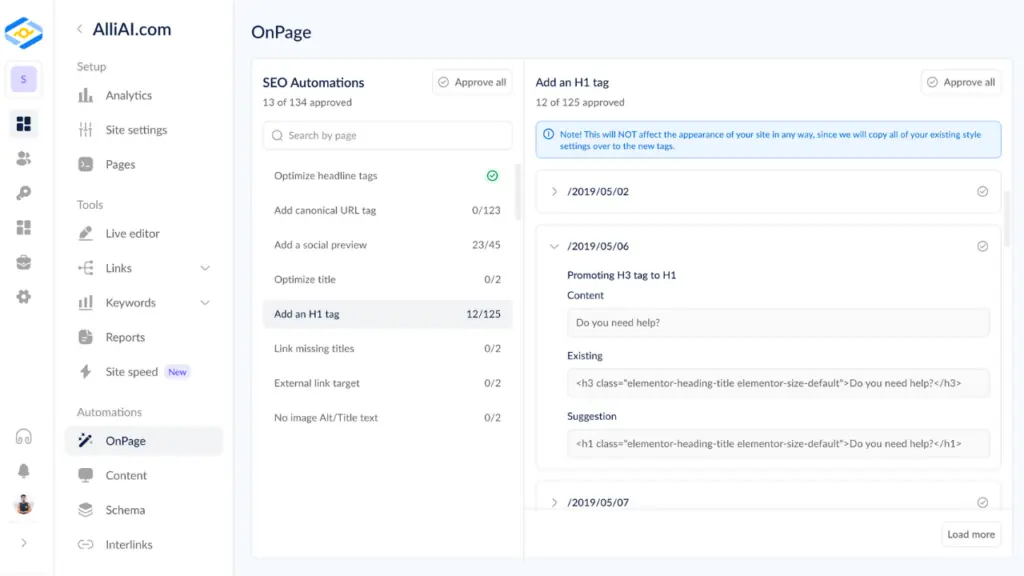
If you were using Search Atlas primarily for OTTO (the deployment automation module), and you also need your modern web stack to be readable by ChatGPT, Claude, and Perplexity, Alli AI is the direct replacement. If you were using Search Atlas for keyword research or content optimization or any of the other functions, the relevant section is below and Alli AI is not the right answer for you.
What it does
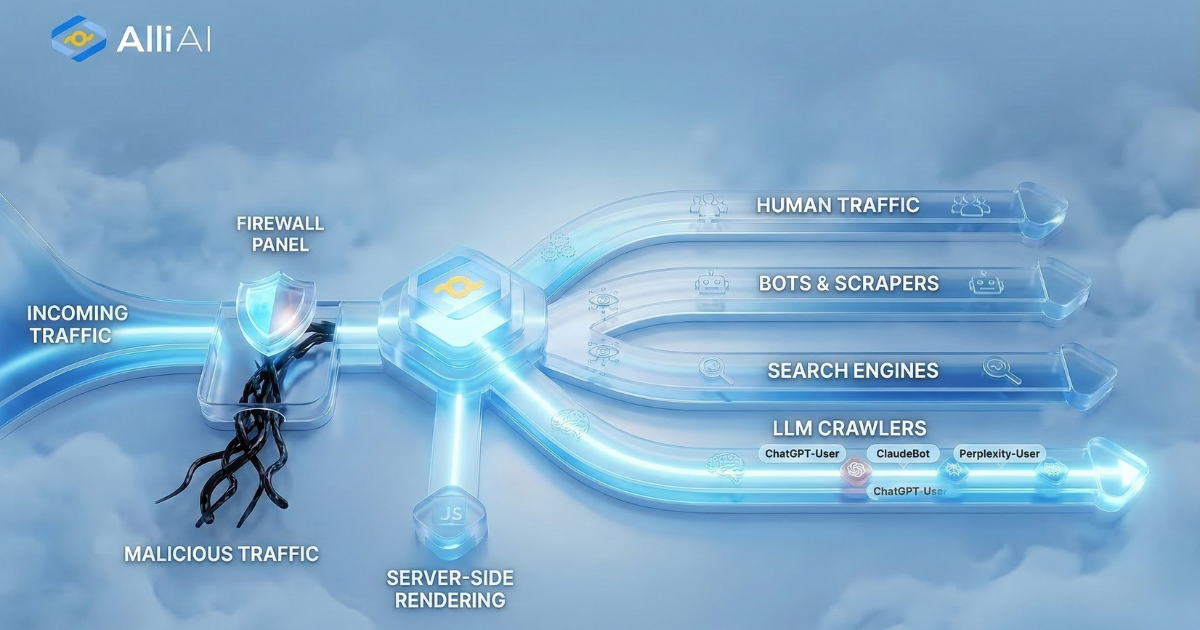
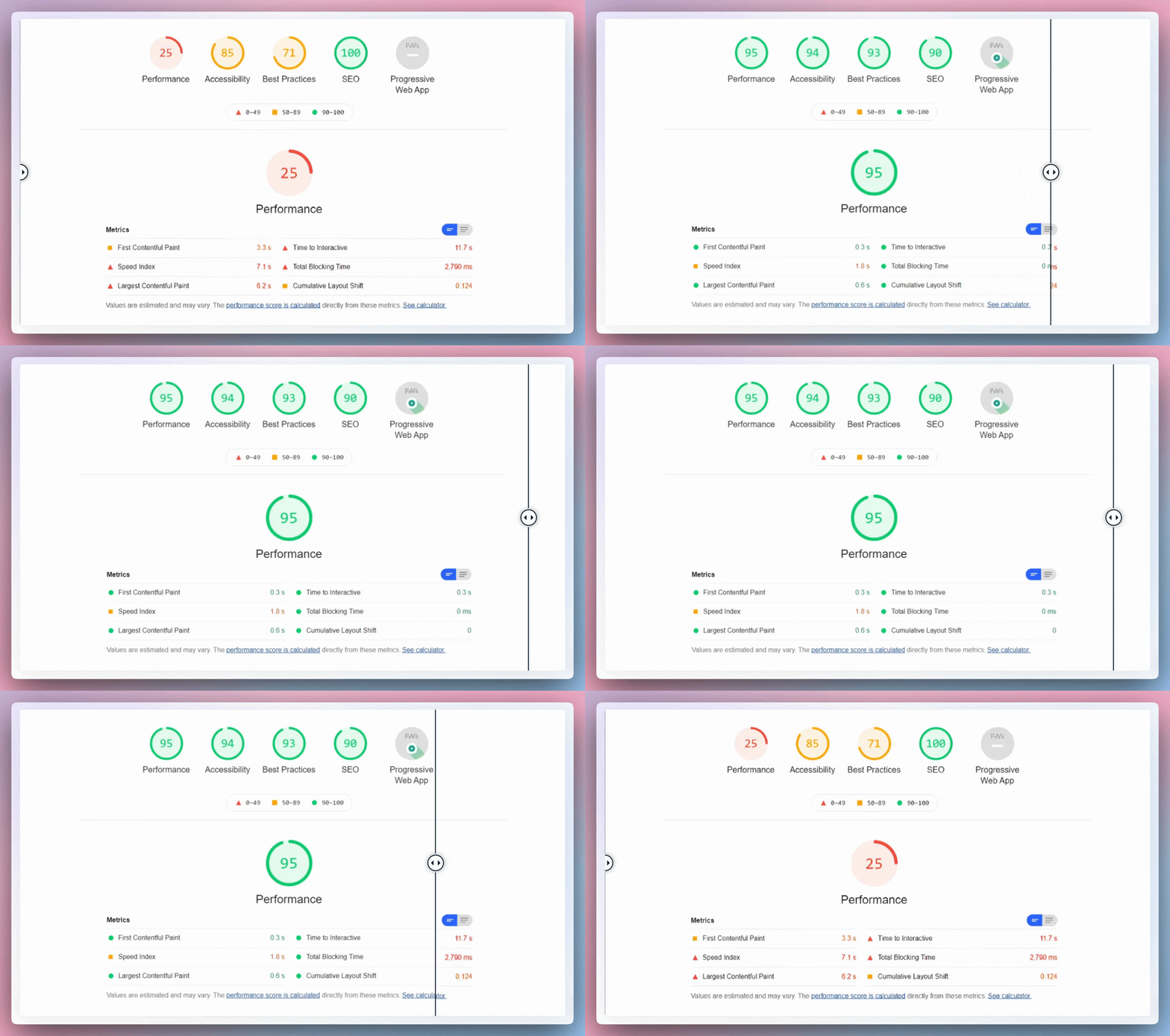
Alli AI’s AI Crawler Enablement Engine pre-renders your site’s HTML and serves the static, fully-rendered version to more than 50 AI crawlers including GPTBot, ClaudeBot, and PerplexityBot. Sites built on React, Vue, Next.js, or Angular that currently return blank pages to those crawlers become fully readable, typically within 24 to 48 hours of snippet installation. This is real server-side rendering infrastructure, not a tag-rewriter. The Visibility Engine Dashboard then surfaces the resulting AI crawler traffic separately from search engines and bots, so you can see what ChatGPT, Claude, and Perplexity are pulling from your site in something close to real time.
On the deployment side: every change previews before it goes live, every change rolls back instantly, nothing modifies your source code, your CMS database, or your hosting environment. One rule deploys across unlimited sites in under 60 seconds. The same snippet works on WordPress, Shopify, Wix, Squarespace, custom React apps, and anything else your portfolio runs on.
How it differs from OTTO specifically
OTTO is a tag-rewriter at render time. It can update meta tags, schema, and on-page elements through the pixel. Alli AI does that too, but the AI crawler enablement piece is a different category: real pre-rendering infrastructure, not a rendering trick. The Visibility Engine Dashboard surfaces traffic data competitors don’t capture. Preview-before-publish and instant rollback are built into the deployment model rather than bolted on.
The honest part
Alli AI uses snippet-based deployment, the same architectural category as OTTO. If your subscription ends, rendered changes stop rendering. The structural differences from Search Atlas are operational reliability, transparent pricing without credit systems, and the AI crawler enablement layer that Search Atlas does not offer at all.
Pricing
Transparent monthly tiers from Business through Enterprise. No credit system, no per-site activation fees. [Confirm current tier prices before publishing.]
Best for: Agencies and in-house teams managing 3 or more sites who used Search Atlas for OTTO deployment and now need both deployment automation and AI crawler readability without the credit-system pricing.
Start free trial → | Book a demo →
4. If you still want an all-in-one platform
If consolidation is a hard requirement and section 2’s reframe doesn’t apply to your situation, these are the four legitimate Search Atlas-class platforms. All four solve the reliability and pricing-opacity issues. None of them deploy changes to your site, with the exception of BrightEdge’s Autopilot tier.
2. Semrush
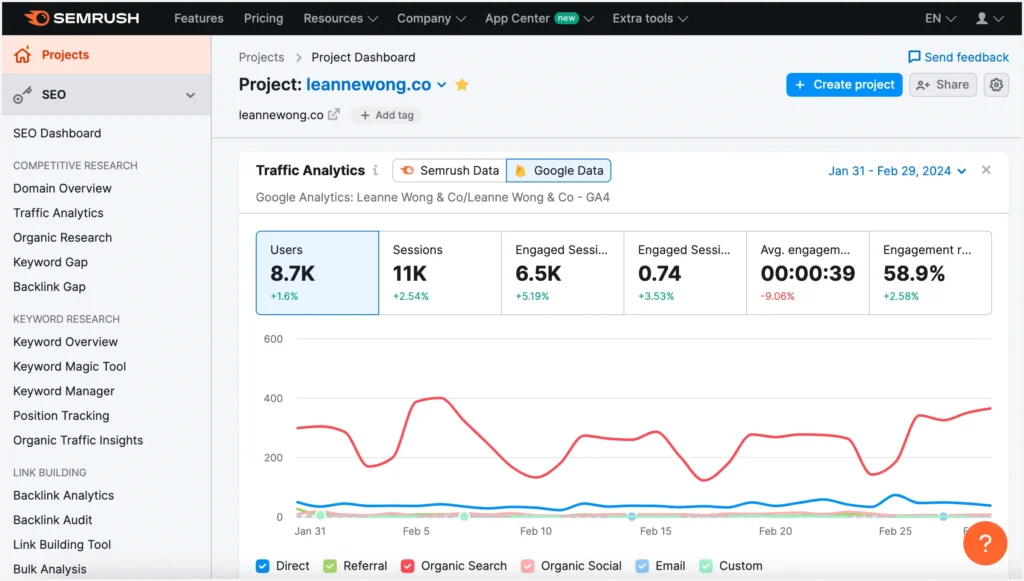
Semrush is the closest direct equivalent to Search Atlas’s all-in-one promise, executed with 17+ years of platform development behind it. Pricing runs $139.95 per month (Pro) to $499.95 per month (Business), with 17% annual discounts. Pricing is transparent: no credit system, no surprise charges.
The data depth meaningfully exceeds Search Atlas: 24.3 billion keywords (vs Search Atlas’s 5.2 billion), 43 trillion backlinks, daily rank tracking on every plan, and broader marketing tools spanning PPC, social, and content. AI search visibility tracking is a $99-per-month add-on that monitors ChatGPT, AI Overviews, and Perplexity. G2 ratings sit at 4.5/5 across 2,800+ reviews. The interface is dense and the learning curve is real, but for agencies running multi-channel digital strategy, Semrush is the most defensible pick.
What it doesn’t do: deploy changes. Every recommendation requires manual implementation through your CMS, your developer, or a third-party deployment platform.
Best for: Agencies running SEO + PPC + content + social for enterprise clients, where the marketing-suite breadth justifies the price.
3. SE Ranking
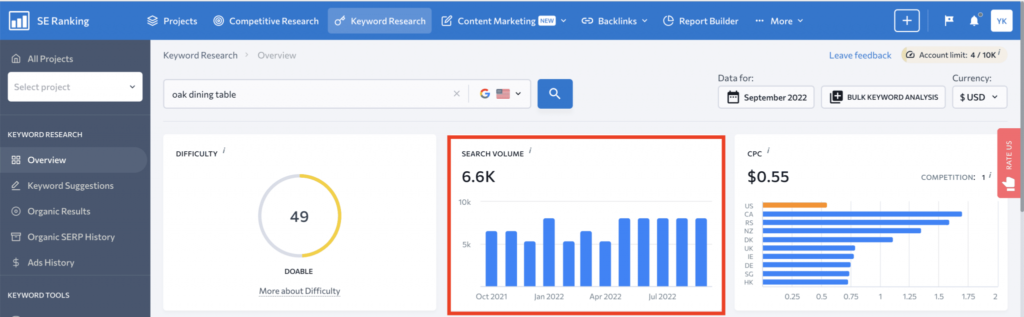
SE Ranking delivers most of what Search Atlas claims to do at roughly half the cost, with the highest user satisfaction in this category. Pricing runs $65 per month (Essential) to $599 per month (Business), with annual billing dropping to $52 to $479. G2 ratings sit at 4.8/5 across 1,380+ reviews.
The platform includes a 5.3 billion keyword database (matching Search Atlas), audits up to 15 million pages, daily rank tracking, content optimization, and white-label reporting. The Agency Pack add-on at $50 per month bundles unlimited white-label reports, 10 client seats, and a lead generation widget. AI visibility tracking across ChatGPT, Perplexity, Gemini, and AI Overviews is included free, not a $99-per-month upcharge. There is no credit system.
The Essential plan limits force most agencies into Growth or Business tiers to match Search Atlas’s capabilities, but even at the higher tiers SE Ranking is materially cheaper than Search Atlas once credits are factored in. No reported pattern of reliability or support issues in public reviews.
Best for: Small to mid-size agencies (5 to 20 clients) who want Search Atlas-class breadth without the bugs and at half the all-in cost.
4. Conductor
Conductor targets the enterprise tier with custom pricing starting around $10,000 annually. The combined platform unifies keyword research, content optimization, and 24/7 site monitoring (via the ContentKing acquisition) with consistent praise for support quality and platform stability. G2 sits at 4.5/5 across 460+ reviews, TrustRadius at 9.2/10, Gartner at 4.9/5.
Conductor AI provides purpose-built Answer Engine Optimization tools: an AI Topical Authority Map, LLM Visibility Tracking across ChatGPT, Perplexity, and Gemini, and AI Content Copilot. Unlimited keyword tracking and complete historical data are standard, not gated. The three-week free trial is the longest in this tier.
The price point excludes small businesses and solopreneurs. For agencies managing $5K+/month clients, the support quality alone often justifies the move.
Best for: Enterprises running content-led SEO with budget for a $10K+ annual platform.
5. BrightEdge
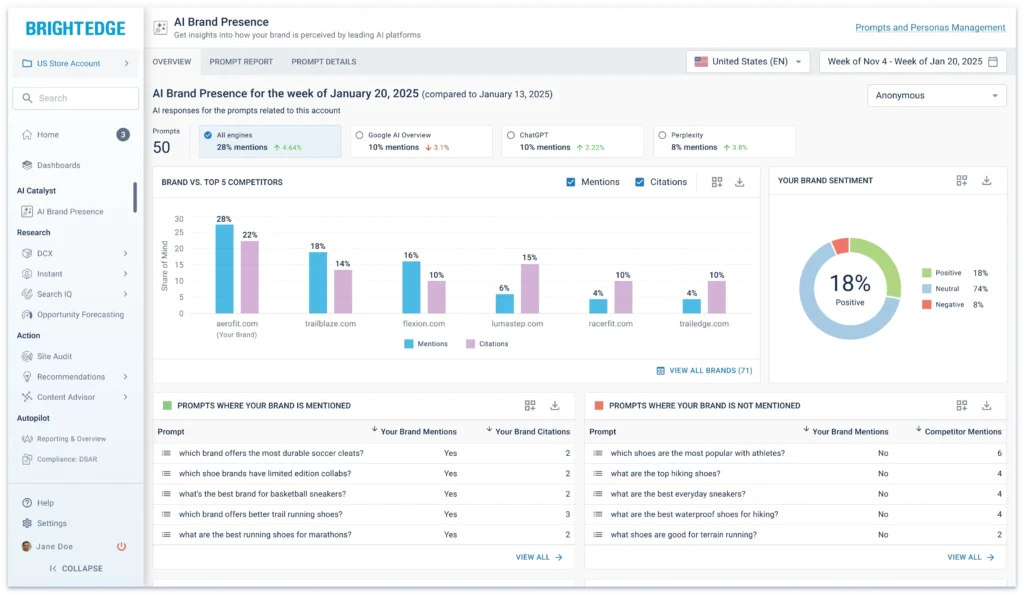
BrightEdge serves the largest enterprises (57% of the Fortune 100). Custom pricing starts around $10,000+ annually. BrightEdge Copilot provides generative AI recommendations and BrightEdge Autopilot offers zero-touch automated optimization, going further on automation than other tools in this tier. Data Cube X analyzes massive keyword databases across 24+ countries. ContentIQ audits millions of pages including PWAs and SPAs.
BrightEdge AI Catalyst tracks ChatGPT, Perplexity, and AI Overviews with proprietary citation analysis. Dedicated customer success teams replace the AI-chatbot-then-loop support pattern Search Atlas users complain about. The platform complexity overwhelms small businesses, and the entry point excludes most non-enterprise budgets.
Best for: Fortune 500 and large enterprises managing multi-brand or multinational portfolios.
5. If you used Search Atlas for content optimization
These tools help you write content that ranks. None deploys changes to your site. All of them outperform Search Atlas’s Content Genius on the specific job of content optimization, because that’s the only job they do.
6. Surfer SEO
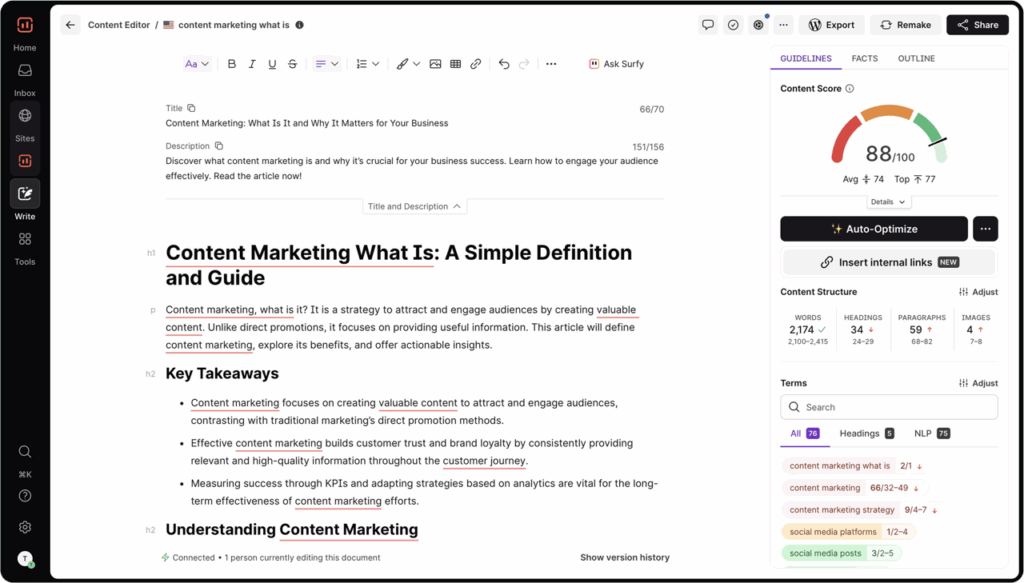
Surfer is the dominant content-optimization tool. Real-time content scoring, NLP optimization across 500+ on-page signals, and 26% correlation with actual rankings (the highest measured in independent studies). Pricing runs $89 per month (Essential) to $299 per month (Max). AI Tracker monitors ChatGPT, Gemini, and AI Overview visibility. AI article generation is $29 per article on top of subscription. Content Audit ($49 per month) and White Label ($49 per month) push total costs higher, but everything is transparent.
Best for: Agencies producing 50 or more optimized articles per month.
7. Clearscope
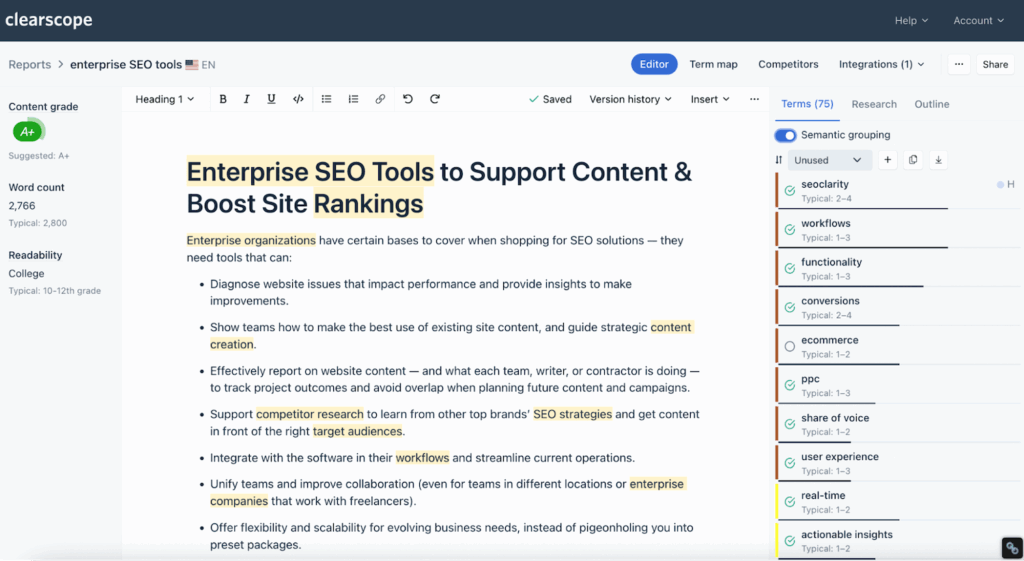
The simplest interface in this category, with letter-grade scoring (A through F) that editorial teams without SEO training can use confidently. IBM Watson semantic analysis and unlimited user seats on every plan. Pricing runs $189 to $399 per month (Essentials and Business). Most expensive content tool on this list, no free trial. Tracks brand visibility in ChatGPT, Gemini, and AI citations.
Best for: Enterprise editorial teams who prioritize ease of use and dedicated support over feature depth.
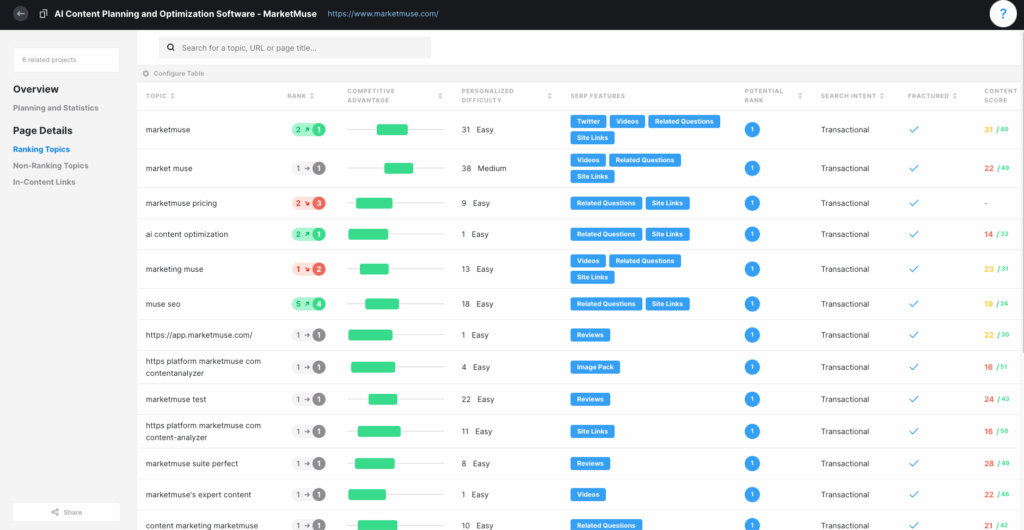
8. MarketMuse
Patented topic modeling that analyzes thousands of pages instead of just the top 20 SERP results. Personalized difficulty scores based on your site’s authority, not generic metrics. Pricing runs $99 per month (Optimize) to $499 per month (Strategy), with Enterprise reaching $1,499+. Credit-based add-ons: Content Briefs are $25 each, First Draft AI articles are $75 each. Steep learning curve.
Best for: Enterprises building topical authority over 12-month-plus horizons with budget for credits on top of subscription.
9. Frase
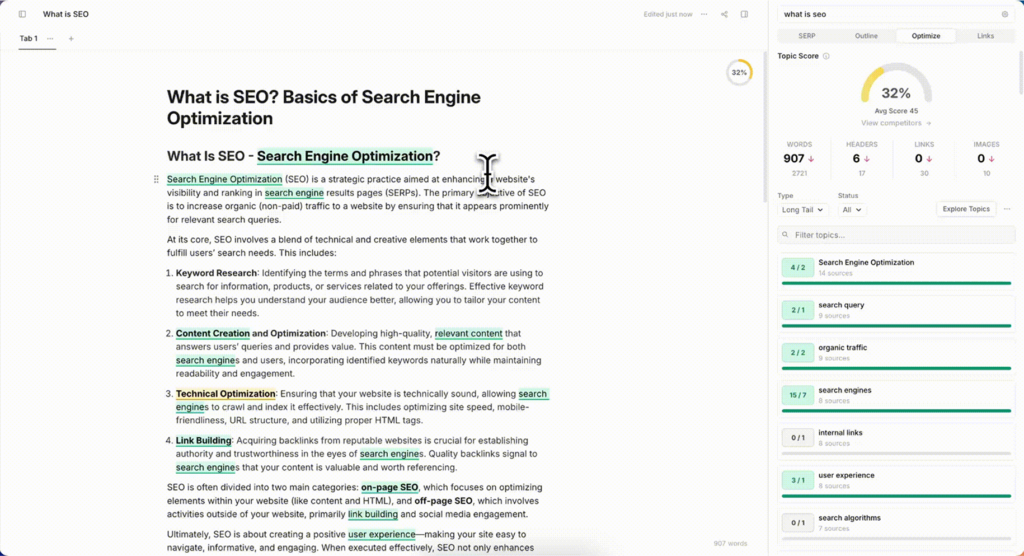
Lowest pricing in the content-optimization category at $15 per month (Solo) to $115 per month (Team). The Team plan includes 3 users and unlimited AI writing using GPT-3.5 and GPT-4. G2 sits at 4.9/5 across 298 reviews, the highest in this category. Brief generation in seconds. Limitation: analysis is based on top 20 SERP results only, which can produce copycat content without strategic differentiation.
Best for: Solopreneurs and small agencies producing 10 to 30 articles per month on tight budgets.
10. NeuronWriter
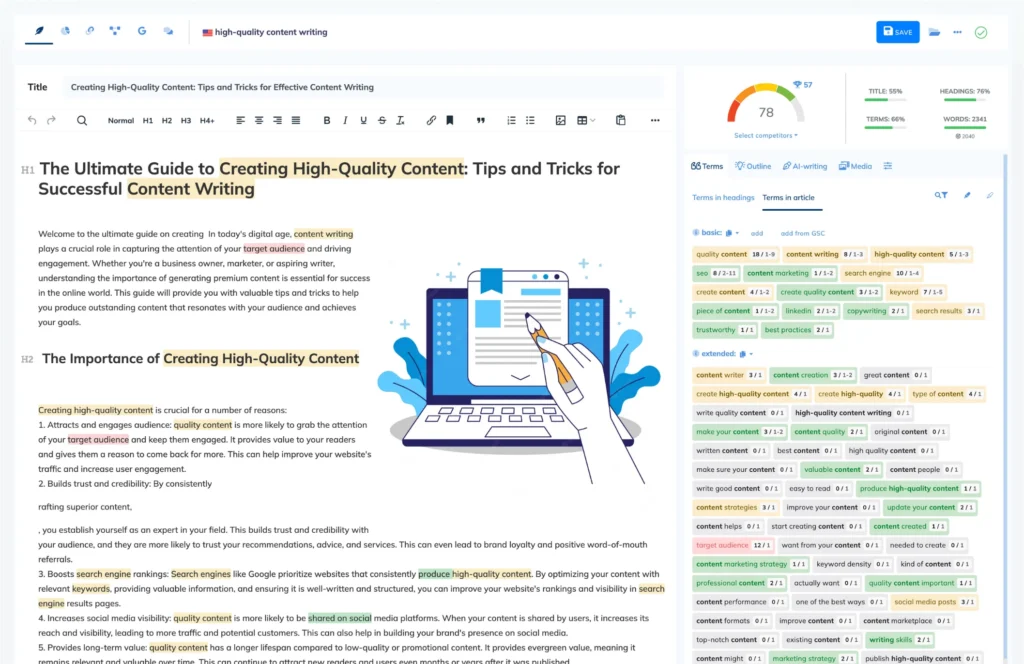
NLP-based content scoring with one-click article generation. Pricing runs $23 per month (Bronze) to $117 per month (Diamond), making it 75 to 85% cheaper than Search Atlas’s Content Genius equivalent. WordPress, Search Console, and Shopify integrations standard. Limitation: AI-generated content does not automatically include suggested keywords and headers, so manual integration is needed.
Best for: SEO copywriters producing 50 or more pieces per month who want budget-tier semantic optimization.
11. PageOptimizer Pro
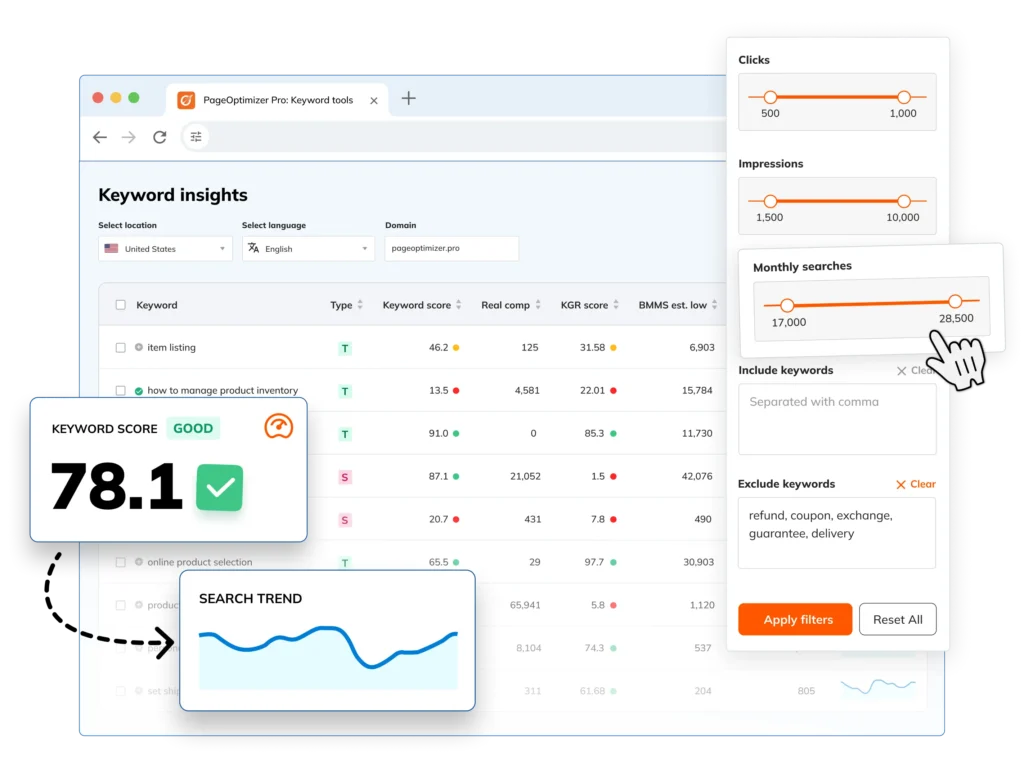
Kyle Roof’s scientific testing methodology based on 400+ Google algorithm tests. The E-E-A-T optimizer with 80-point evaluation system is the only tool of its kind. Pricing runs $34 to $67 per month plus credits for AI Writer, EEAT, NLP, and Watchdog features. Recommendations only, no automation. Reports of 50% of articles reaching top 5 positions in user testimonials.
Best for: Content teams who want empirical, test-driven optimization rules and are willing to do the implementation themselves.
6. If you used Search Atlas for backlinks and competitive intelligence
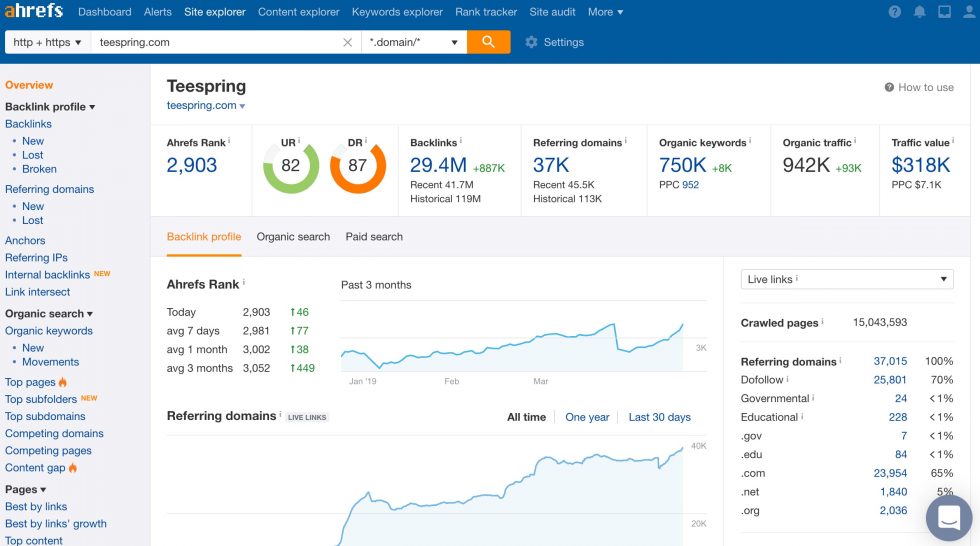
12. Ahrefs
The strongest backlink index in the industry: 35 trillion backlinks updated every 15 minutes, second only to Google as a web crawler. Search Atlas’s backlink data is meaningfully thinner. Pricing runs $129 per month (Lite) to $449 per month (Advanced). Brand Radar AI tracks ChatGPT, AI Overviews, and Perplexity (currently in beta, moving to $99 per month). The credit-based pricing introduced in 2022 has drawn user pushback because credits deplete faster than expected, especially on lower tiers. The Patches feature creates fixes in Site Audit but does not deploy them.
Best for: Agencies who used Search Atlas primarily for backlink data and will pay premium prices for the largest, freshest index.
13. Majestic
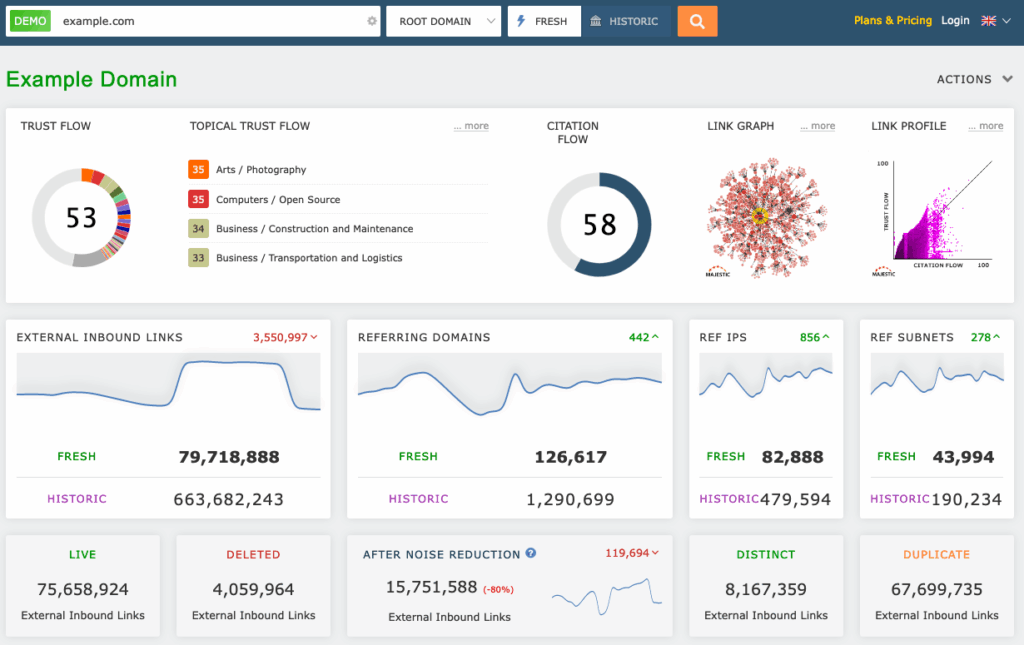
Largest commercial backlink database with Trust Flow and Citation Flow as proprietary authority metrics. Historic Index goes back to 2006, deeper than any competitor. Pricing runs $49.99 to $1,599.99 per month. Pure link analysis, no keyword research or content tools. Bulk Backlink Checker analyzes up to 1 million URLs simultaneously.
Best for: Link-building specialists, domain traders, and agencies focused exclusively on off-page work.
14. SpyFu
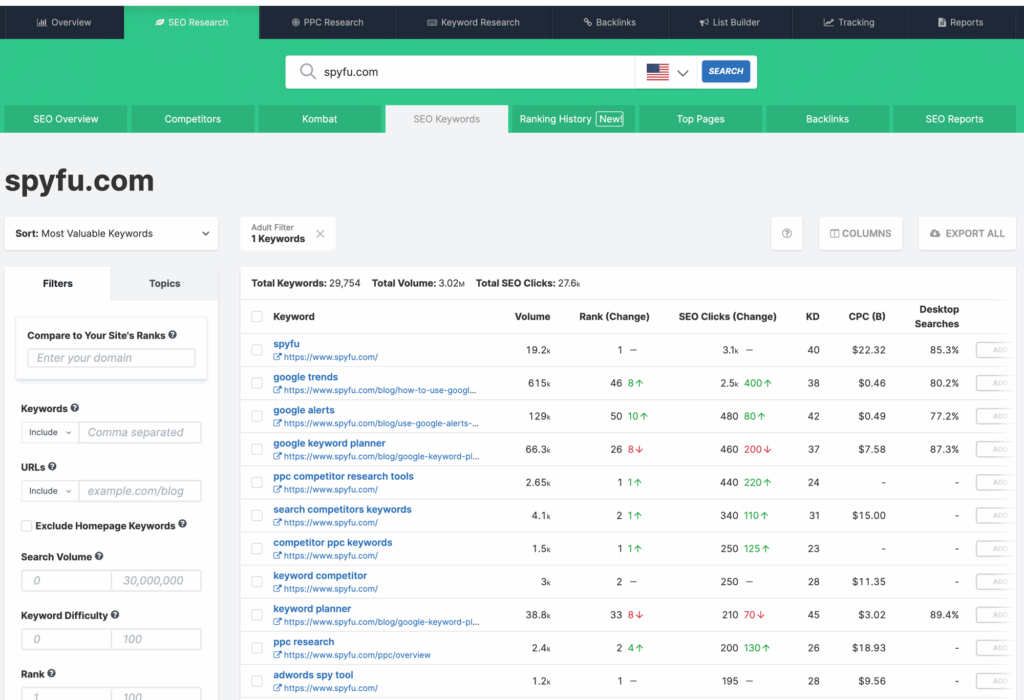
Competitor keyword and PPC research with 15+ years of historical SERP data. Pricing runs $39 per month (Basic) to $79 per month (Professional), 60 to 80% cheaper than Search Atlas for the competitive intelligence function specifically. SpyGPT tracks brand mentions in AI models. Data updates weekly to monthly, not in real time. Trustpilot reviews note data accuracy concerns similar to Search Atlas, but at the lower price point.
Best for: Agencies reverse-engineering competitor strategies, PPC research, and prospect qualification.
7. If you used Search Atlas for technical SEO audits
15. Screaming Frog
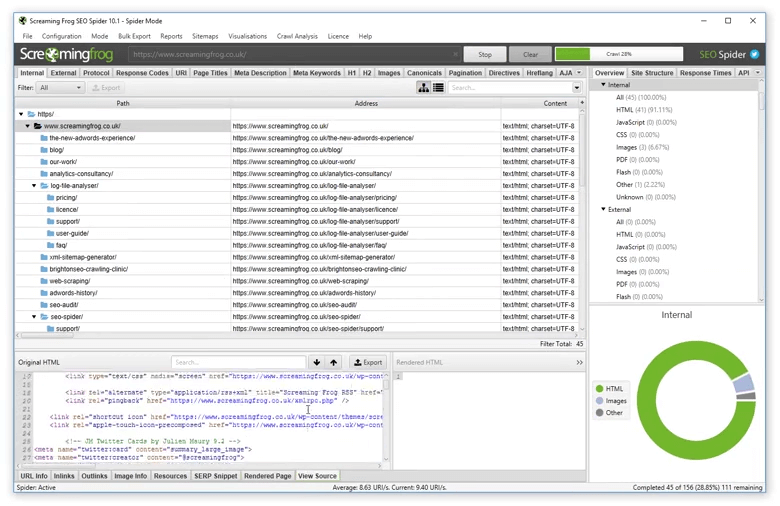
The desktop-based crawler at £199 per year (roughly $259), one-time annual fee, no monthly subscription. Crawls 130+ technical parameters across millions of URLs depending on hardware. AI integrations with OpenAI, Gemini, and Claude for semantic similarity detection. Free version handles 500 URLs. Capterra rates it 4.9/5 across 132 reviews. Integration with Google Analytics, Search Console, PageSpeed Insights, Ahrefs, Moz, and Majestic centralizes diagnostic data without subscription stack.
Limitations: desktop only, no cloud version, requires 16GB+ RAM for large crawls. No content creation, keyword research, or rank tracking, so this pairs with another tool for the rest of the SEO stack.
Best for: Technical SEO specialists, site migrations, e-commerce technical audits, recurring crawls.
8. If you used Search Atlas for local SEO
This is one of Search Atlas’s stronger product modules (Local Galactic) and most “Search Atlas alternatives” lists fail to address it. If GBP automation, citation building, and local rank tracking were your reason for being on Search Atlas, neither Semrush nor Alli AI replaces it. You need a dedicated local SEO platform.
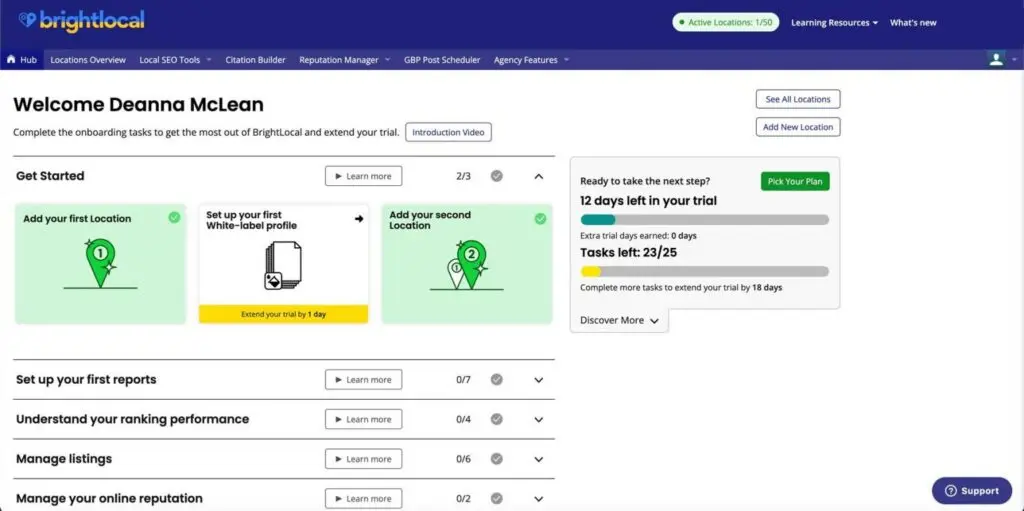
16. BrightLocal
The most established local SEO platform, with focused tooling for Google Business Profile management, citation building and cleanup, local rank tracking with grid-based local-pack visualization, and reputation management. Pricing starts around $39 per month for solo operators and scales for agencies with multi-location and white-label needs. [Confirm current pricing tiers before publishing.]
What it gives you: citation submission to 100+ local directories, automated NAP (name/address/phone) consistency monitoring, geo-grid rank tracking that visualizes your local pack rankings across a map of locations, and review monitoring across Google, Facebook, and major industry-specific platforms.
What it doesn’t do: keyword research, backlink analysis, content optimization, or any of the broader SEO functions. This is a focused local SEO tool, not a platform.
Whitespark is a comparable alternative with a slightly stronger citation-building reputation; Yext targets the enterprise multi-location segment at higher price points. For most agencies leaving Search Atlas’s Local Galactic, BrightLocal is the most direct mid-market replacement.
Best for: Agencies and in-house teams managing local SEO for multi-location businesses, franchise operators, and service-area businesses.
9. If you used Search Atlas for the WordPress changes (and want them permanent)
This is the only category on the list where “permanent changes that survive subscription cancellation” is literally true. Both options write directly to your WordPress database. If you cancel, the optimizations stay.
The tradeoff is WordPress only. If your portfolio includes Shopify, Wix, custom React, or anything else, plugins do not solve your problem and you are in the wrong category.
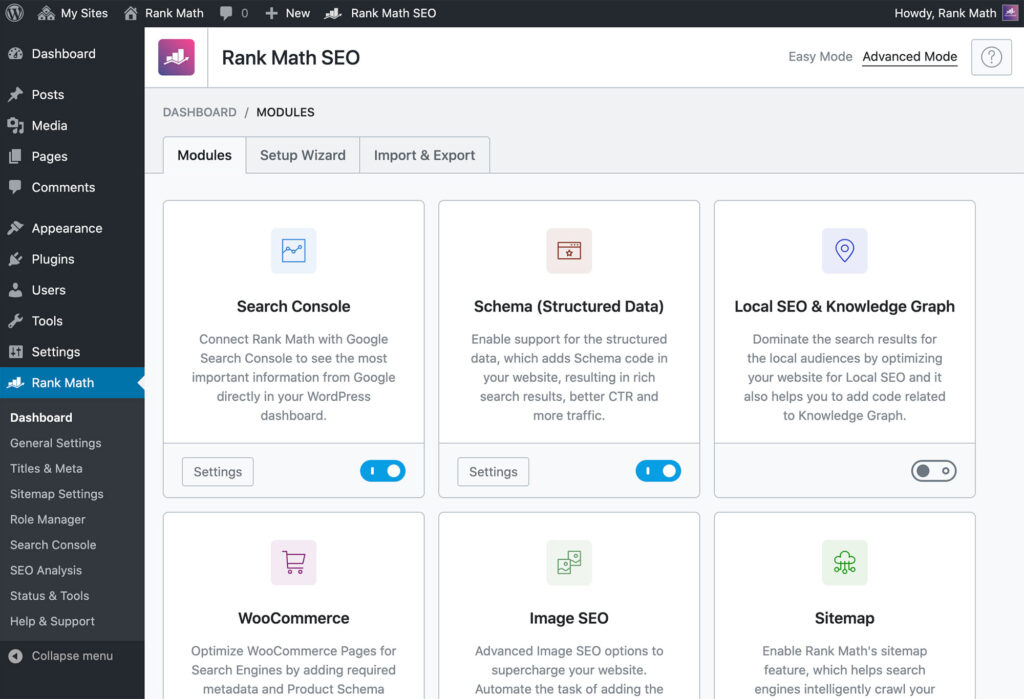
17. Rank Math
Rank Math offers more in its free version than Yoast charges for in Premium. Free includes unlimited keyword optimization (5 per post), 840+ schema types, redirect management, 404 monitoring, and Google Search Console integration. Pro pricing starts at $59 per year (effective rate from $7.99 per month), with Business and Agency tiers at $24.99 per month and $59.99 per month respectively. The Agency tier supports up to 750 client websites with white-labeled reporting.
Module-based architecture lets you disable unused features for performance, keeping Rank Math 3x lighter than Yoast on PHP overhead. WordPress.org rates it 4.9/5 across thousands of reviews. Theme compatibility issues come up occasionally, and the depth of options has a learning curve.
Best for: Agencies running WordPress-only client portfolios, and budget-conscious users who want enterprise features at plugin pricing.
18. Yoast SEO
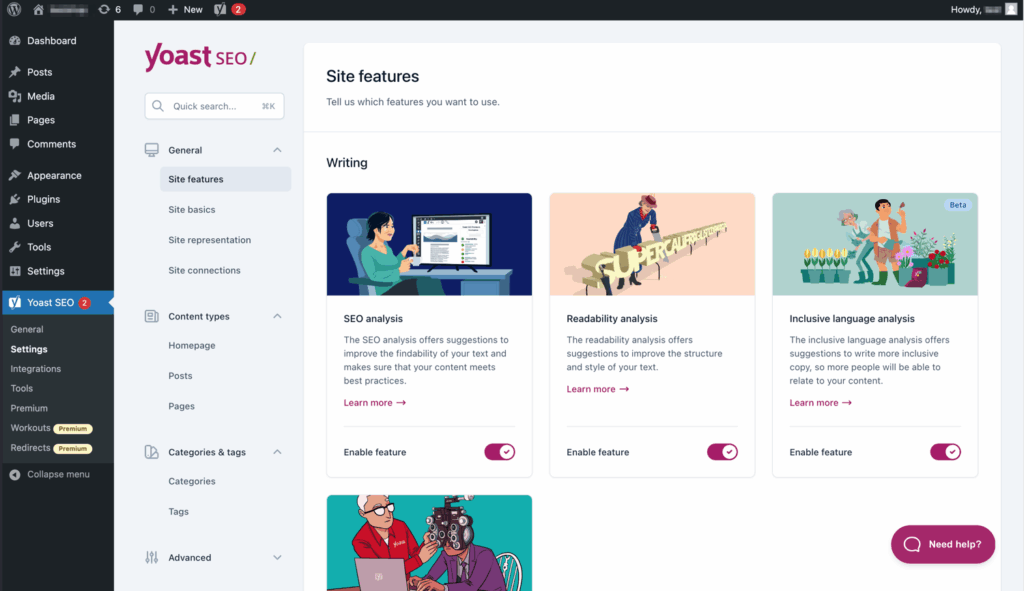
The established option, with 5+ million active installations and 15+ years of development. Premium costs $118.80 per year per site. Every site needs its own license, which is the catch for multi-site portfolios.
Premium adds redirect manager, internal linking suggestions, multiple focus keywords, Semrush integration, Wincher rank tracking, and (as of July 2025) bundled Local, Video, and News SEO modules. The new AI Generate and AI Optimize beta features handle meta descriptions and content suggestions. The free version is more limited than Rank Math’s. There are no white-label or agency-specific features.
Best for: Single-site WordPress owners who want a trusted, well-documented plugin and don’t need multi-site economics.
10. If you used Search Atlas for entity-based SEO
19. InLinks
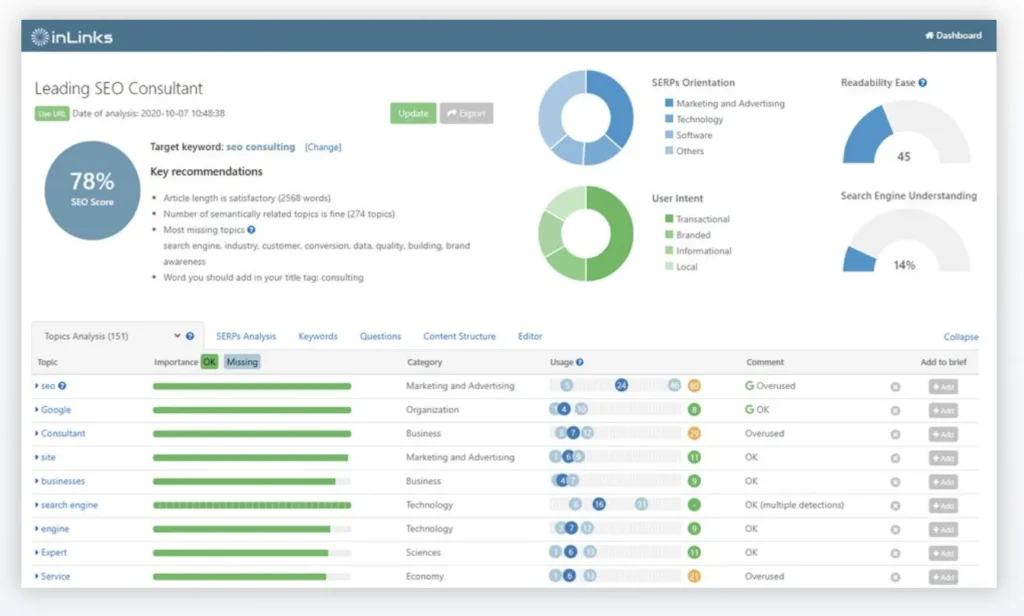
Entity-based optimization using a proprietary knowledge graph rather than the keyword-and-SERP model most tools use. Automated internal linking based on semantic relationships and automated schema (About & Mentions, FAQ) at scale. Pricing starts at $49 per month for 100 interlinked pages.
The platform uses JavaScript injection for links and schema, the same architectural category as OTTO and Alli AI: changes route through the snippet and stop rendering if the subscription ends. Content improvements based on InLinks insights remain permanent regardless. Eight languages supported.
The entity approach has a real learning curve for keyword-trained SEOs, but for agencies preparing for AI search era ranking, entity SEO is a directly relevant skill.
Best for: Technical SEO specialists working on entity SEO and AI search era preparation.
11. Decision framework
The shortest path from “I’m leaving Search Atlas” to “I picked the right replacement” runs through one question:
Which Search Atlas function were you actually using?
| If you used Search Atlas for… | Pick from this section | The strongest options |
|---|---|---|
| OTTO deployment automation | Section 3 | Alli AI |
| All-in-one consolidation | Section 4 | Semrush, SE Ranking, Conductor, BrightEdge |
| Content Genius / content optimization | Section 5 | Surfer, Frase, Clearscope, MarketMuse |
| Backlink analysis | Section 6 | Ahrefs, Majestic |
| Competitive and PPC research | Section 6 | SpyFu |
| Technical site audits | Section 7 | Screaming Frog |
| Local Galactic / GBP automation | Section 8 | BrightLocal |
| WordPress-only changes | Section 9 | Rank Math, Yoast |
| Entity SEO | Section 10 | InLinks |
Three things to keep in mind regardless of which section applies:
- If you used Search Atlas for two or three functions, you’ll likely end up with two or three tools instead of one. That’s not a failure of consolidation. It’s the best-of-breed model working as intended.
- If your primary frustration was credit-system pricing, verify total cost of ownership for any replacement. Some alternatives (Ahrefs, MarketMuse) also use credit systems. Others (SE Ranking, Frase, BrightLocal) don’t.
- If you’re choosing primarily on AI search visibility, verify whether the platform actually pre-renders your site for AI crawlers (real server-side rendering for crawlers that don’t execute JavaScript) or whether it only tracks AI mentions. These are different capabilities.
Ready to test it?
If your reason for leaving Search Atlas is the OTTO deployment module specifically, start your free trial of Alli AI. Preview before publish, instant rollback, AI crawler enablement included on every plan. No credit card required.
Or book a 30-minute demo to see the Visibility Engine Dashboard against a portfolio similar to yours. If your reason for leaving was something other than OTTO, the section above for your function will point you to the right alternative.